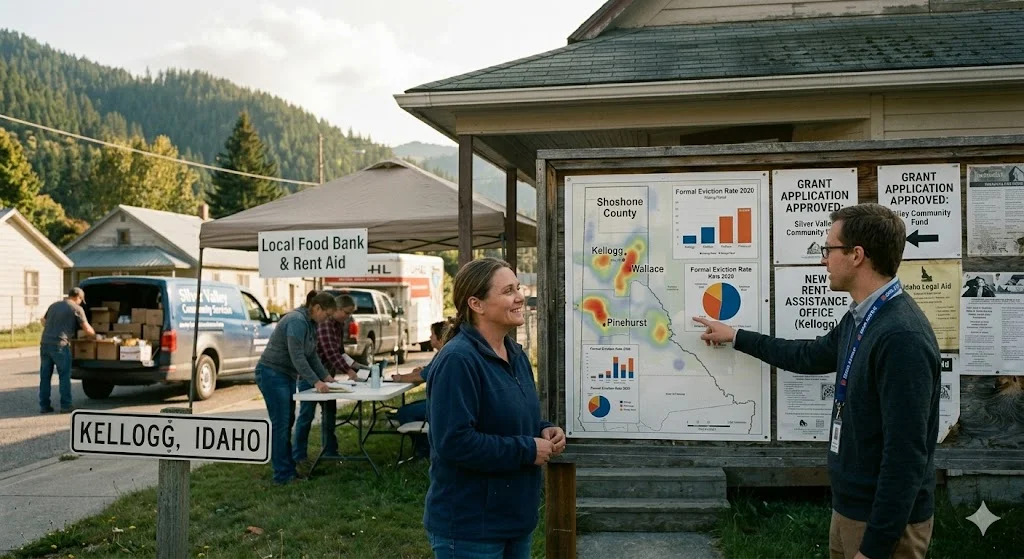
The Idaho Policy Institute Formal Eviction Rate 2020 Shoshone County provides one of the most detailed datasets on eviction trends across Idaho, helping researchers and policymakers understand how housing instability affects communities. In 2020, one statistic drew particular attention: the formal eviction rate in Shoshone County. This rural county recorded a formal eviction rate of about nearly double the statewide average of 0.6%, highlighting significant disparities within the state.
This article explores the meaning, context, and implications of that figure. By examining economic conditions, pandemic impacts, and rural housing dynamics, we can better understand why Shoshone County stood out in 2020 and what lessons can be drawn for future housing policy.
The formal eviction rate refers to shoshone county formal eviction rate 2020 idaho policy institute
percentage of renter households that receive a court-ordered eviction within a specific period. It differs from eviction filings, which only represent cases initiated by landlords. A formal eviction occurs only when a judge orders tenants to vacate the property, making it a more precise measure of displacement.
This metric is especially valuable because it reflects actual legal outcomes rather than threats or informal removals. By focusing on court-ordered evictions, researchers can track how often disputes escalate to the most serious stage and compare trends across counties and years with greater accuracy.
In 2020, Shoshone County had approximately renter households. Landlords filed eviction cases, and resulted in formal eviction orders. This produced a filing rate of about and a formal eviction rate of
While the absolute numbers may seem small, the rate tells a more important story. Roughly one in every idaho policy institute formal eviction rate shoshone county 2020 renter households in the county faced a court-ordered eviction that year. Compared to the statewide average, this indicates a disproportionately high level of housing instability in a relatively small rural population.
Why Shoshone County’s Rate Was Higher
Several factors contributed to the elevated eviction rate in Shoshone County. One major reason is its rural economic structure, which relies on industries like mining, tourism, and service work sectors that were particularly vulnerable during the idaho policy institute formal eviction rate 2020 shoshone county 2020 pandemic. Job losses and reduced income made it harder for renters to keep up with payments.
Additionally, rural areas often lack the support systems available in urban centers. Limited access to legal aid, mediation programs, and rental assistance can increase the likelihood that disputes escalate to formal eviction. Without early intervention, tenants are more likely to face court judgments rather than negotiated solutions.
Impact of COVID-19 on Evictions
The year was unique due to the global pandemic. Court closures, eviction moratoriums, and emergency rental assistance programs significantly reduced eviction activity across Idaho. In fact, eviction filings dropped by around statewide compared to previous years.
However, these protections did not eliminate evictions entirely. In Shoshone County, the rate remained relatively high despite these interventions. This suggests that national and state policies may not have been equally effective in all regions, particularly in rural communities with fewer resources and support networks.
Rural Housing Challenges in Shoshone County
Housing markets in rural areas like Shoshone County differ significantly from urban environments. Rental supply idaho policy institute 2020 formal eviction rate shoshone county often limited, and vacancy rates can be low, giving landlords more leverage in disputes. At the same time, tenants may have fewer alternative housing options, increasing their vulnerability.
Economic conditions also play a role. Lower average incomes and fewer employment opportunities can make it difficult for residents to absorb financial shocks. When combined with limited access to assistance programs, these factors create a fragile housing ecosystem where eviction risks are amplified.
Comparing Shoshone County to Idaho Statewide Trends
When compared to the statewide average, Shoshone County stands out as an outlier. Idaho’s overall formal eviction rate in was about significantly lower than Shoshone’s
Urban counties such as Ada County reported even lower rates, partly due to the presence of mediation programs and stronger support systems. These programs help resolve disputes before they reach the point of formal eviction, demonstrating how policy interventions can directly influence outcomes.
Policy Implications and Lessons Learned
The data from Shoshone County highlights the importance of localized policy responses. A one-size-fits-all approach may not address the unique challenges faced by rural communities. Expanding access to mediation, legal aid, and rental assistance could significantly reduce formal eviction rates.
Furthermore, the data underscores the need for better housing infrastructure in rural areas. Increasing the availability of affordable housing and improving economic stability can help prevent evictions before they occur. Policymakers can use insights from the Idaho Policy Institute Formal Eviction Rate 2020 Shoshone County to design targeted interventions that address these underlying issues.
Limitations of the 2020 Data
While the 2020 eviction data provides valuable insights, it must be interpreted carefully. The pandemic created unusual conditions that affected both housing markets and legal processes. Court closures and moratoriums disrupted normal patterns, making it difficult to compare 2020 directly with other years.
Additionally, formal eviction rates do not capture informal evictions, where tenants leave before a court order is issued. These cases can be significant but are harder to track. As a result, the actual level of housing instability may be higher than the data suggests.
FAQs
It means that about of renter households in Shoshone County received a court ordered eviction in 2020, indicating the proportion of tenants legally forced to leave their homes.
It is calculated by dividing the number of court-ordered evictions by the total number of renter households in a given area.
Why was Shoshone County higher than the state average?
Factors include rural economic challenges, limited support services, and fewer mediation programs compared to urban counties.
Did COVID-19 increase evictions in 2020?
Overall, evictions decreased due to moratoriums and court closures, but some areas like Shoshone County still experienced relatively high rates.
Filings are cases initiated by landlords, while formal evictions are those that result in a court order requiring tenants to leave.
No, they do not include informal evictions or cases where tenants leave before a court judgment.
Conclusion
The Idaho Policy Institute Formal Eviction Rate 2020 Shoshone County formal eviction rate for Shoshone County in 2020 offers a revealing snapshot of housing challenges in rural Idaho. Despite a statewide decline in evictions during the pandemic, Shoshone County recorded a significantly higher rate, reflecting deeper structural issues in its housing and economic systems